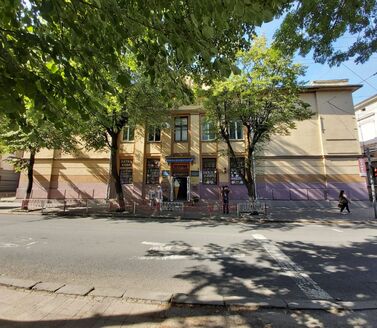
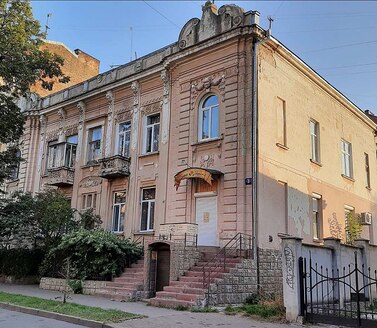
Jewish gymnasium
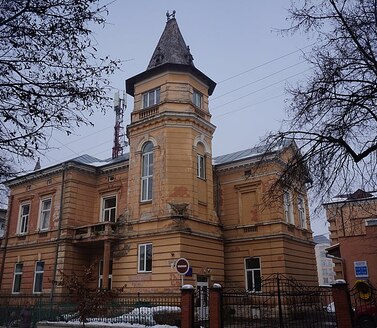
In the central part of the city, within the former Zabolotivskyi suburb, ...
chak Mayer Horowitz came from one of the two most influential Jewish families in Stanislavov - the Horowitzes and the Halperns, who for many years constituted the majority in the Jewish self-government/kagal.
Rabbi Aryeh Leibish ben Eliezer Halevi Horowitz (1758–1844, great-grandson of Rabbi Yitzhak Horowitz, rabbi of Hamburg) founded the Horowitz rabbinical dynasty in Stanislavov in 1784. It was in 1784 that he began to serve in the city.
chak Mayer Horowitz came from one of the two most influential Jewish families in Stanislavov - the Horowitzes and the Halperns, who for many years constituted the majority in the Jewish self-government/kagal.
Rabbi Aryeh Leibish ben Eliezer Halevi Horowitz (1758–1844, great-grandson of Rabbi Yitzhak Horowitz, rabbi of Hamburg) founded the Horowitz rabbinical dynasty in Stanislavov in 1784. It was in 1784 that he began to serve in the city.
Karol Halpern belonged to one of the most influential Halpern families in ...
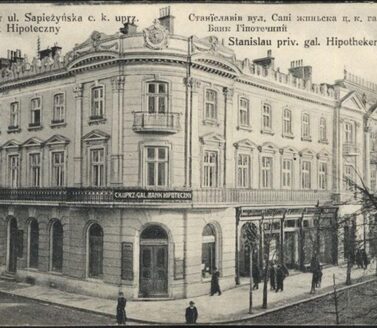
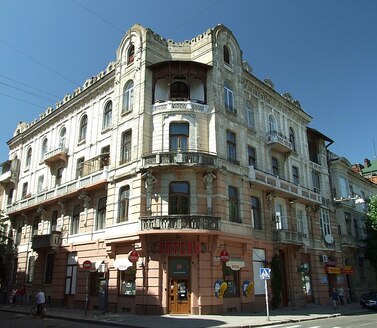
The complex of private tenements No. 4, 6, 8, 10 (until 1939 - Batorogo St., ...
In 1912, at the corner of Golukhovsky (now Chornovola) and Giller (now ...
Historically, "the main Jewish world stretched between Halytska and ...
Kamianitsa on the modern street. Mazepy 12 was built 125 years ago. Its ...
Synagogue on St. Sobieskiho, 28 (now - Sichovy Streltsiv) belonged to the ...
Yakov Margoshes was a well-known entrepreneur in Galicia.
The leather ...
The Horowitzes belonged to the rabbinic religious dynasty of the great rabbi and Talmudist Rabbi Zvi Hirsh Horowitz (known as Rabbi Hirsheli), who is considered by Jewish tradition to be a gaon - an eminent scholar of Jewish law. There were many legends, almost fairy tales, about such rabbis as Rabbi Zvi Hirsch Horowitz. As Torah scholars and pious people, they were recognized throughout the Jewish world. Rabbi Yehezkiel from Prague wrote about the "three pillars" on which the Jewish world of that time stood: "Rabbi Yitzhak from Lviv, Rabbi Zvi Hirsch from Chortkov, and Rabbi from Stanislavov."
In the 20s and 30s of the XX century. the rabbi was David Halevi Horowitz.
Rabbi Moshe from Vienna died in Stanislavov on August 3, 1941. During the anti-Jewish action of the Nazis called "Blue Monday", the 70-year-old Rabbi Horowitz was brutally tortured and abused, and at the end he was shot by the Gestapo chief of the city, G. Krieger himself.
He was the last rabbi in Stanislaus from the rabbinical dynasty of the Horowitzes, who ruled in Stanislaus for 170 years. During these years, the Horowitzes were the spiritual leaders of Stanislaviv Jewry.
Itzhak Mayer Horowitz is a member of the Stanislaviv city council, a well-known public figure, a board member of the Stanislaviv Jewish religious community, a long-time leader and a member of the board of the city organization of the right-wing conservative Zionist party "Mizrahi" (abbreviated as Merkaz Ruhani - Spiritual Center). In the socio-political society of the region, Yitzhak Mayer Horowitz was one of the famous personalities. The "Mizrahi" party, created in 1902, spread its influence over the entire Carpathian region and Galicia. In 1935, "Mizrahi" in Stanislaviv had more than 310 members, headed by Mozes Hokhman. Twelve more religious and charitable societies were fully or partially under its influence.
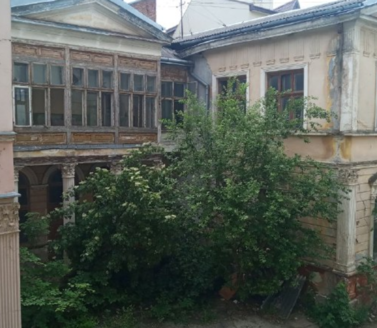
At one time, Adam Bachynskyi, a well-known doctor in Stanyslav, lived on the second floor of the tenement house.
The Horowitzes belonged to the rabbinic religious dynasty of the great rabbi and Talmudist Rabbi Zvi Hirsh Horowitz (known as Rabbi Hirsheli), who is considered by Jewish tradition to be a gaon - an eminent scholar of Jewish law. There were many legends, almost fairy tales, about such rabbis as Rabbi Zvi Hirsch Horowitz. As Torah scholars and pious people, they were recognized throughout the Jewish world. Rabbi Yehezkiel from Prague wrote about the "three pillars" on which the Jewish world of that time stood: "Rabbi Yitzhak from Lviv, Rabbi Zvi Hirsch from Chortkov, and Rabbi from Stanislavov."
In the 20s and 30s of the XX century. the rabbi was David Halevi Horowitz.
Rabbi Moshe from Vienna died in Stanislavov on August 3, 1941. During the anti-Jewish action of the Nazis called "Blue Monday", the 70-year-old Rabbi Horowitz was brutally tortured and abused, and at the end he was shot by the Gestapo chief of the city, G. Krieger himself.
He was the last rabbi in Stanislaus from the rabbinical dynasty of the Horowitzes, who ruled in Stanislaus for 170 years. During these years, the Horowitzes were the spiritual leaders of Stanislaviv Jewry.
Itzhak Mayer Horowitz is a member of the Stanislaviv city council, a well-known public figure, a board member of the Stanislaviv Jewish religious community, a long-time leader and a member of the board of the city organization of the right-wing conservative Zionist party "Mizrahi" (abbreviated as Merkaz Ruhani - Spiritual Center). In the socio-political society of the region, Yitzhak Mayer Horowitz was one of the famous personalities. The "Mizrahi" party, created in 1902, spread its influence over the entire Carpathian region and Galicia. In 1935, "Mizrahi" in Stanislaviv had more than 310 members, headed by Mozes Hokhman. Twelve more religious and charitable societies were fully or partially under its influence.
At one time, Adam Bachynskyi, a well-known doctor in Stanyslav, lived on the second floor of the tenement house.