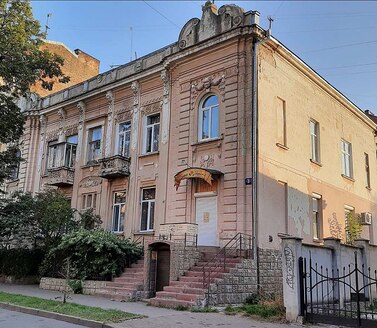
The tenement house of Yitzhak Mayer Horowitz
chak Mayer Horowitz came from one of the two most influential Jewish ...
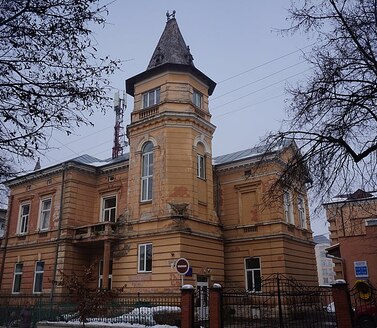
In 1912, at the corner of Golukhovsky (now Chornovola) and Giller (now Gordynskyi) streets, a monumental four-story building with two identical facades facing both streets was built at the expense of a Jewish entrepreneur (who was also a doctor of law and a lawyer). Thanks to this, the building has two addresses - 28 Chornovola and 17 Gordynskoho.
Weingarten and his family occupied only one luxurious apartment on the second floor. The first floor was given to shops, and the apartments on the upper floors were rented out to rich tenants.
In 1912, at the corner of Golukhovsky (now Chornovola) and Giller (now Gordynskyi) streets, a monumental four-story building with two identical facades facing both streets was built at the expense of a Jewish entrepreneur (who was also a doctor of law and a lawyer). Thanks to this, the building has two addresses - 28 Chornovola and 17 Gordynskoho.
Weingarten and his family occupied only one luxurious apartment on the second floor. The first floor was given to shops, and the apartments on the upper floors were rented out to rich tenants.
chak Mayer Horowitz came from one of the two most influential Jewish ...
The complex of private tenements No. 4, 6, 8, 10 (until 1939 - Batorogo St., ...
Historically, "the main Jewish world stretched between Halytska and ...
Kamianitsa on the modern street. Mazepy 12 was built 125 years ago. Its ...
Synagogue on St. Sobieskiho, 28 (now - Sichovy Streltsiv) belonged to the ...
Yakov Margoshes was a well-known entrepreneur in Galicia.
The leather ...
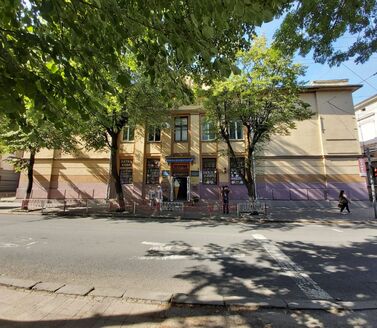
Until now, a tailor's workshop and a pharmacy are located on the first floor of the building. As for the pharmacy, it is one of the oldest in our city. It was opened in January 1938 by Master of Pharmacy Oleksandr Weiss. At that time, it was the tenth pharmacy in Stanislaviv and it was called "Under the Mother of God". True, the pharmacy business of Mr. Weiss did not last long, because already in September 1939, the first Soviets came to the city and successfully nationalized both the pharmacy and the building itself. According to the usual Soviet tradition, the premises were reshaped into smaller apartments and those residents who did not have time to take a nap, tenants, let's say, of a different social class, were placed next to them.
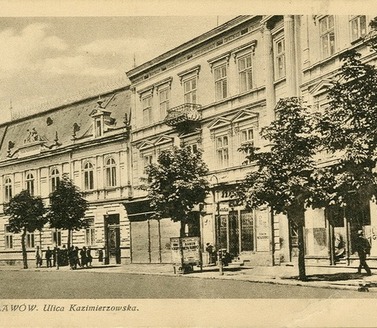
It is said that Karl Weingarten could not bear such an insult and one day went to the balcony of the fourth floor (although some sources claim that it was a window) and jumped down, thereby ending both his own life and the injustice of the world. We remember a postcard issued in Vienna by businessman Schreier in 1915. On the card you can see people standing on the balcony of the second floor.
The building survived the first Soviets, the German occupation, and the second Soviets. The Second Soviets turned the attic into a theater dormitory, which lasted until the end of the 50s. It was then that they decided to do away with the dormitory and began to provide apartments in the building to doctors, teachers and, of course, employees of the local theater. That is why, in 1960, an apartment in the building was given to the actor George (Yuriy) Shimansky, who was sent to Stanislav, to promote theatrical activities. The Honored Artist of Ukraine lived in this building until his death in 1990.
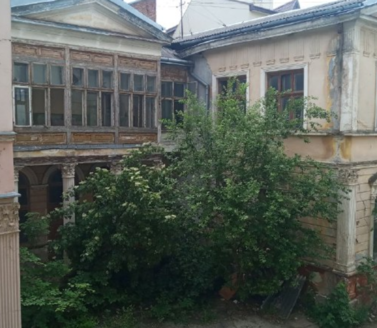
In recent years, the tenement house has been beset by the same troubles that are common to all old houses in Ivano-Frankivsk. Left to its own devices, the old architecture begins to collapse under the influence of natural factors. Stucco is crumbling, sculptures are falling apart. The ancient door was preserved only on the side of Chornovola Street.
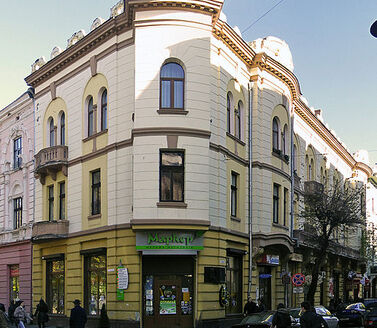
Until now, a tailor's workshop and a pharmacy are located on the first floor of the building. As for the pharmacy, it is one of the oldest in our city. It was opened in January 1938 by Master of Pharmacy Oleksandr Weiss. At that time, it was the tenth pharmacy in Stanislaviv and it was called "Under the Mother of God". True, the pharmacy business of Mr. Weiss did not last long, because already in September 1939, the first Soviets came to the city and successfully nationalized both the pharmacy and the building itself. According to the usual Soviet tradition, the premises were reshaped into smaller apartments and those residents who did not have time to take a nap, tenants, let's say, of a different social class, were placed next to them.
It is said that Karl Weingarten could not bear such an insult and one day went to the balcony of the fourth floor (although some sources claim that it was a window) and jumped down, thereby ending both his own life and the injustice of the world. We remember a postcard issued in Vienna by businessman Schreier in 1915. On the card you can see people standing on the balcony of the second floor.
The building survived the first Soviets, the German occupation, and the second Soviets. The Second Soviets turned the attic into a theater dormitory, which lasted until the end of the 50s. It was then that they decided to do away with the dormitory and began to provide apartments in the building to doctors, teachers and, of course, employees of the local theater. That is why, in 1960, an apartment in the building was given to the actor George (Yuriy) Shimansky, who was sent to Stanislav, to promote theatrical activities. The Honored Artist of Ukraine lived in this building until his death in 1990.
In recent years, the tenement house has been beset by the same troubles that are common to all old houses in Ivano-Frankivsk. Left to its own devices, the old architecture begins to collapse under the influence of natural factors. Stucco is crumbling, sculptures are falling apart. The ancient door was preserved only on the side of Chornovola Street.