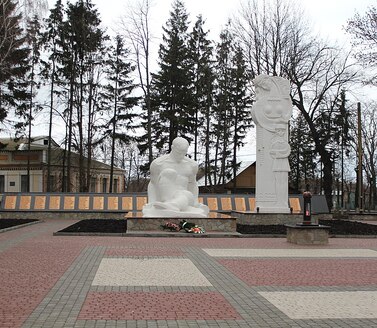
Memorial complex
A complex of memorial signs, which perpetuates the memory of countrymen ...
The monument (guard No. 1702) is built of stone and brick.
It is a late version of a three-nave basilica with a central nave and an apse separated in plan and height. The decor of the building is weakly expressed: the main and western facades are accented with triangular pediments, volutes and pilasters. In the interior, the central nave is connected to the side naves through arches resting on pylons. Between each pair of pylons are built-in balconies that overlook the central nave. Entrance to the Church from the western side. From the very beginning, the Church was part of the ensemble of the monastery, the annexes of which cover the monument from three sides (except the western one), forming an internal rectangular cloister in the south. The monument is a typical example of late Baroque architecture
The monument (guard No. 1702) is built of stone and brick.
It is a late version of a three-nave basilica with a central nave and an apse separated in plan and height. The decor of the building is weakly expressed: the main and western facades are accented with triangular pediments, volutes and pilasters. In the interior, the central nave is connected to the side naves through arches resting on pylons. Between each pair of pylons are built-in balconies that overlook the central nave. Entrance to the Church from the western side. From the very beginning, the Church was part of the ensemble of the monastery, the annexes of which cover the monument from three sides (except the western one), forming an internal rectangular cloister in the south. The monument is a typical example of late Baroque architecture
In 1750, the court marshal of Lithuania, Prince Janusz Sangushko signed documents for the construction of a church and a monastery of the Capuchin Order in the city of Starokostiantyniv. The construction of the Church began in 1754 and ended in 1778. John the Baptist was chosen as the patron saint of the church. In 1886, due to various historical events, this Church was closed by order of Nicholas I, and the monks were transferred to Izyaslav. After the establishment of Bolshevik power in Ukraine, the persecution of church ministers began, and in 1935, the Soviet authorities closed the Church.
During the Second World War, in 1942, the church was opened and the parish was restored. In 1947, the temple was closed again by the Soviet authorities, the building was transferred to the House of Culture. Already during the reconstruction of 1989, the entire premises of the church were transferred to the Roman Catholic community, after which its activities were revived. In 2001, for the 250th anniversary of the church, a bell tower was erected near the church.
In 1750, the court marshal of Lithuania, Prince Janusz Sangushko signed documents for the construction of a church and a monastery of the Capuchin Order in the city of Starokostiantyniv. The construction of the Church began in 1754 and ended in 1778. John the Baptist was chosen as the patron saint of the church. In 1886, due to various historical events, this Church was closed by order of Nicholas I, and the monks were transferred to Izyaslav. After the establishment of Bolshevik power in Ukraine, the persecution of church ministers began, and in 1935, the Soviet authorities closed the Church.
During the Second World War, in 1942, the church was opened and the parish was restored. In 1947, the temple was closed again by the Soviet authorities, the building was transferred to the House of Culture. Already during the reconstruction of 1989, the entire premises of the church were transferred to the Roman Catholic community, after which its activities were revived. In 2001, for the 250th anniversary of the church, a bell tower was erected near the church.