Ukrainian Branch of the Post (former. Main Post Office)
Area Railway station accommodates a complex of buildings of the South ...
St. Demetrius temple is the cathedral of the diocese of Kharkiv and Poltava of the Ukrainian Autocephalous Orthodox Church. Church in honor of the martyr Demetrius was built by Ukrainian settlers shortly after the founding of the city, in the middle of the XVII century. Now here goes a noisy Poltava Way - one of the key streets of the city with dozens of architectural monuments of local importance, located near South Station, and Central Market.
St. Demetrius temple is the cathedral of the diocese of Kharkiv and Poltava of the Ukrainian Autocephalous Orthodox Church. Church in honor of the martyr Demetrius was built by Ukrainian settlers shortly after the founding of the city, in the middle of the XVII century. Now here goes a noisy Poltava Way - one of the key streets of the city with dozens of architectural monuments of local importance, located near South Station, and Central Market.
The temple is ravnootdalёnnym metro stations "South Station" and the "Central Market" (a ten minute walk). To the nearest bus stop "street Konev" ursiruyut tram routes 3, 6 and taxis 11e, 244e, 258e. Close stop is "Marshal Malinovsky," her stop taxis 221e, 246e, 254e, 278e.

Area Railway station accommodates a complex of buildings of the South ...
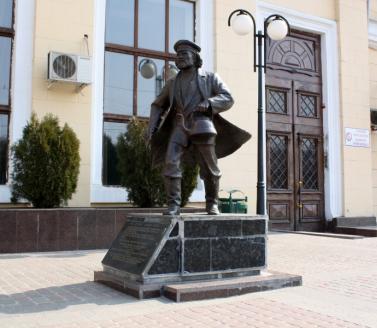
An unusual monument is located on the 1st platform Kharkov Southern station. ...
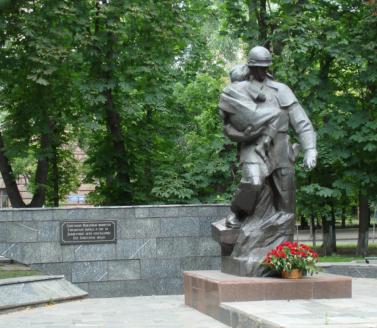
This park is located in close proximity to the oldest part of the city Fire ...

A wooden church in honor of the martyr Demetrius was built in the middle of the seventeenth century, it was a spiritual obstacle on the outskirts of the city, leading to Poltava. It is in connection with the arrangement of the temple was chosen by the saint in whose honor was consecrated the central throne was a famous warrior martyr, so I think that he will protect the Kharkiv fortress from enemies.
According to legend, it was the patronage of St. Demetrius that helped protect the city from the attacks of the Tatars. In the XVIII - early XIX centuries, parishioners of the church were residents of the suburban settlements Goncharovka and Panasovka, glorified in the works of the writer Grigory Kvitka-Osnovyanenko. The first church was wooden. In 1764, it was dismantled and a new one, also wooden, was built, which burned down in 1804 along with the archive. Soon a cemetery was formed near the temple, so the church became a cemetery for some time. It was made in traditional forms of Ukrainian architecture with a bell tower, which stood separately. The third temple was built in 1808. The temple was built by architect E.A. Vasiliev. At first, the temple was poor, the old iconostasis was used for it - from the Osnovyanska church. From the side of the street, the church was fenced with a picket fence, and from other sides - a fence from brushwood. With an increase in the parish in 1842, two patronal limits were added to the church building - in honor of the Smolensk Icon of the Virgin (Hodegetria) (the only icon that survived the fire of 1804, has been preserved since the time of the first church and revered as a great shrine) and in honor of St. Sergius of Radonezh, and also erected a bell tower. After expansion, the temple accommodated 800 people. In 1872, on the site near the church, a two-story stone house was built for church attendants according to the project of the architect of the Kharkov educational district D.L. Tkachenko. In the 30s of the twentieth century, worship was prohibited in the church, over time, the church turned into a cinema “Sport”. The bell tower was demolished. Only after the Independence of Ukraine was declared, services were resumed, for some time a struggle was fought for the return of the church to the parish. Currently, work is underway to restore the original appearance of the temple, funded by donations from parishioners.
A wooden church in honor of the martyr Demetrius was built in the middle of the seventeenth century, it was a spiritual obstacle on the outskirts of the city, leading to Poltava. It is in connection with the arrangement of the temple was chosen by the saint in whose honor was consecrated the central throne was a famous warrior martyr, so I think that he will protect the Kharkiv fortress from enemies.
According to legend, it was the patronage of St. Demetrius that helped protect the city from the attacks of the Tatars. In the XVIII - early XIX centuries, parishioners of the church were residents of the suburban settlements Goncharovka and Panasovka, glorified in the works of the writer Grigory Kvitka-Osnovyanenko. The first church was wooden. In 1764, it was dismantled and a new one, also wooden, was built, which burned down in 1804 along with the archive. Soon a cemetery was formed near the temple, so the church became a cemetery for some time. It was made in traditional forms of Ukrainian architecture with a bell tower, which stood separately. The third temple was built in 1808. The temple was built by architect E.A. Vasiliev. At first, the temple was poor, the old iconostasis was used for it - from the Osnovyanska church. From the side of the street, the church was fenced with a picket fence, and from other sides - a fence from brushwood. With an increase in the parish in 1842, two patronal limits were added to the church building - in honor of the Smolensk Icon of the Virgin (Hodegetria) (the only icon that survived the fire of 1804, has been preserved since the time of the first church and revered as a great shrine) and in honor of St. Sergius of Radonezh, and also erected a bell tower. After expansion, the temple accommodated 800 people. In 1872, on the site near the church, a two-story stone house was built for church attendants according to the project of the architect of the Kharkov educational district D.L. Tkachenko. In the 30s of the twentieth century, worship was prohibited in the church, over time, the church turned into a cinema “Sport”. The bell tower was demolished. Only after the Independence of Ukraine was declared, services were resumed, for some time a struggle was fought for the return of the church to the parish. Currently, work is underway to restore the original appearance of the temple, funded by donations from parishioners.