Central City Park Arch
The idea of architectural composition belongs to the building’s designer ...
Massive columns, rusticated walls, high rectangular windows, decorative stucco molding, city coats of arms and monograms are distinctive features of this monumental building, in which in the early 20th century the most important issues of the city development have been considered and important decisions have been made during the First Ukrainian War of Independence.
The idea of architectural composition belongs to the building’s designer ...
It is the oldest still-standing brick building in Vinnytsia which has become ...
More than a hundred years ago, Vinnytsia was already considered extremely ...
In the midst of the noisy, modern city center there is an ascetic ancient ...
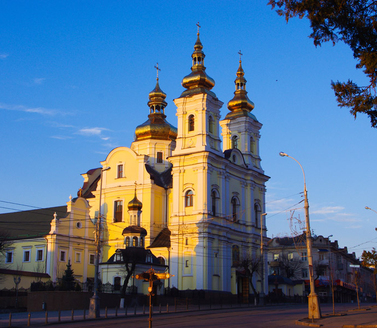
Its domes glistening in the sun and heading for the blue sky can be seen ...
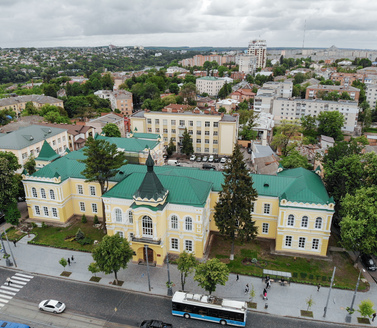
The former Non-classical Secondary School is one of the buildings which form ...
It is the most noticeable modern building in the center of Vinnytsia. When ...
The first six-level building has been decorating a central Vinnytsia street ...
The construction was completed in 1911 – it was built in a modernized Empire style, having three levels and a small inner court. The city bank, the government, and the Assembly room of City Duma deputies were located over here. The present-day residents and guests of Vinnytsia can be surprised to find out that in 1917 the first democratic elections based on principles of equality and generality were conducted in this very building. The next ones did not occur until the 1990s - until the restoration of Ukraine's independence. The Bolshevik soldiers put an end to the civilized undertaking when, during the 1918 Duma session, they proclaimed the establishment of the Soviet regime with weapons in their hands.
In December 1918 Vinnytsia City Duma was among the first in Podillia to accept the power of the Directorate. After Vinnytsia was proclaimed a temporary capital of the Ukrainian People’s Republic in 1919, the building was a seething cauldron of emotion.
Dmytro Markovych, Ukrainian statesman and public figure, famous writer, Minister of Justice of the Ukrainian People’s Republic used to work here. In autumn 1919 Yevhen Petrushevych, President of the Western Ukrainian People’s Republic, was here at the ceremonial reception. In this building in 1920 Józef Piłsudski, Polish Marshall, being requested by the Ukrainian government, met Symon Petliura, the President of the Ukrainian People’s Republic.
In Soviet times the city public administration was housed in the building. After 1944 until the mid-1990s it was used for administrative purposes (in particular, management of the Sugar Trust was located in this building)
The construction was completed in 1911 – it was built in a modernized Empire style, having three levels and a small inner court. The city bank, the government, and the Assembly room of City Duma deputies were located over here. The present-day residents and guests of Vinnytsia can be surprised to find out that in 1917 the first democratic elections based on principles of equality and generality were conducted in this very building. The next ones did not occur until the 1990s - until the restoration of Ukraine's independence. The Bolshevik soldiers put an end to the civilized undertaking when, during the 1918 Duma session, they proclaimed the establishment of the Soviet regime with weapons in their hands.
In December 1918 Vinnytsia City Duma was among the first in Podillia to accept the power of the Directorate. After Vinnytsia was proclaimed a temporary capital of the Ukrainian People’s Republic in 1919, the building was a seething cauldron of emotion.
Dmytro Markovych, Ukrainian statesman and public figure, famous writer, Minister of Justice of the Ukrainian People’s Republic used to work here. In autumn 1919 Yevhen Petrushevych, President of the Western Ukrainian People’s Republic, was here at the ceremonial reception. In this building in 1920 Józef Piłsudski, Polish Marshall, being requested by the Ukrainian government, met Symon Petliura, the President of the Ukrainian People’s Republic.
In Soviet times the city public administration was housed in the building. After 1944 until the mid-1990s it was used for administrative purposes (in particular, management of the Sugar Trust was located in this building)