The Consulate of Germany (in 1920-1937 years)
The house on the street Sumy, 54 from 1920 to 1937. was the German ...
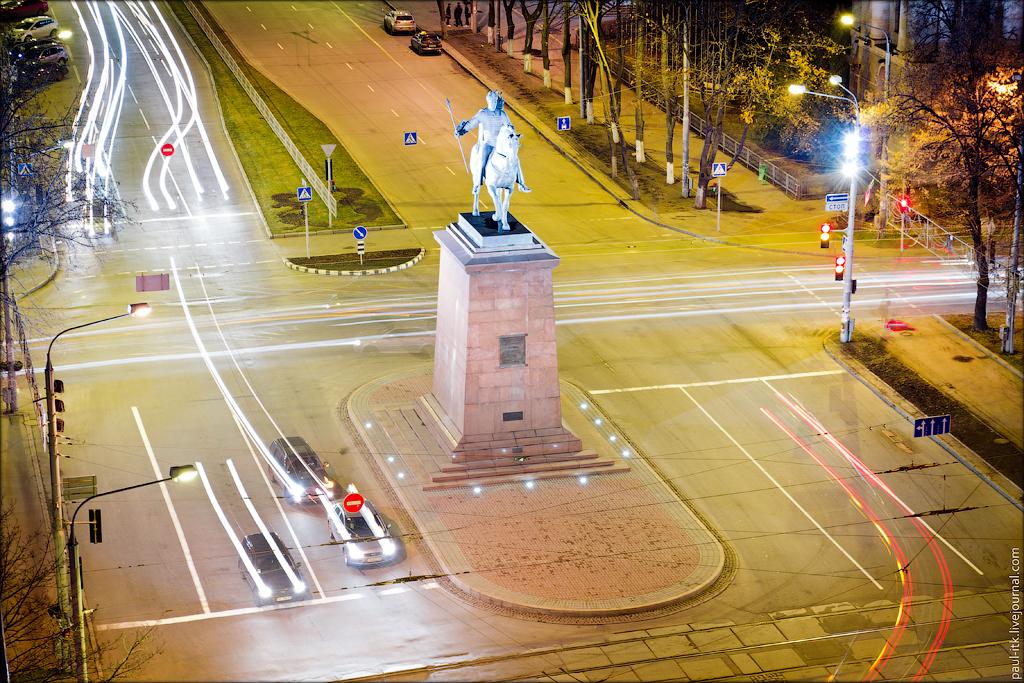
This monument is also called the monument Kharkiv Kozak (Khariton). He was set to the 350th anniversary since the foundation of Kharkov (1654) in the administrative part of the city, at the beginning of the avenue of Science, one of the central and most important streets in the city. The height of the pedestal is made of red granite is 8.5 meters, in bronze equestrian statue - about 4 meters.
The monument is located not far from the metro "Derzhprom" and "University". To stop "Derzhprom" shuttle shuttle bus number 20, 33, 88, 119, 215, 217, trolley bus №18.
The house on the street Sumy, 54 from 1920 to 1937. was the German ...
In a beautiful mansion at the Sumy street, 43, it was at the beginning of ...
One of the best views of the city is from the tallest buildings in the ...
Zooologichesky bridge also called the bridge lovers, as its rods appear ...
Mironositskaya area, located in the city center, was subject to a variety of ...
Not far from the center of Kharkov is located Square, the name of which was ...
Former city garden, situated in the center of Kharkov, a long time got its ...
This commemorative sculpture is made Zurab Tsereteli, Russian sculptor of Georgian origin. The monument was presented to the mayor of Moscow Yuri Luzhkov to the City Day.
It is believed that the plan of the mayor of Moscow arose in 2004, on the 350th anniversary of the so-called “reunification of Ukraine with Russia” (in fact, the Pereyaslav agreement, which resulted in the conclusion of the “Birch Articles” and the subordination of part of the Ukrainian state to the Russian Empire). The monument was erected on August 22, 2004. After the opening, the monument caused a lot of controversy among the local intelligentsia. Especially significant are the comments about the mismatch of the appearance (clothes and weapons) of the founder of Kharkov to the times of the middle of the XVII century. Even more controversial is the fact of the existence of Cossack Kharko, since the mention of him appears in historiography only towards the end of the 18th century: the “Topographical Description of Kharkiv Governorate”, which dates from 1785, states the following: “... if you believe the rumor, then this place "Someone of the wealthy Little Russians started up a farm, but who he was, where and when, there was no information about that, by the name of Khariton, and by the common parlance, Kharko, from whom this city and river supposedly received their title." At the same time, the famous Slobozhansky historian Dmitry Bagaliy mentioned ataman Ivan Krivoshlyk as the founder of Kharkov in his scientific research. The monument is made in the form of a sculpture of a rider located on a pedestal. In the rider’s hand is a spear, a shield, a bow and a quiver with arrows are located behind his shoulders. The science prospectus is located behind the back of the monument, so Kharkovites sometimes call this part of the city the “back” or “horse” part or (more colloquially) the districts located there, “behind the ass”.
This commemorative sculpture is made Zurab Tsereteli, Russian sculptor of Georgian origin. The monument was presented to the mayor of Moscow Yuri Luzhkov to the City Day.
It is believed that the plan of the mayor of Moscow arose in 2004, on the 350th anniversary of the so-called “reunification of Ukraine with Russia” (in fact, the Pereyaslav agreement, which resulted in the conclusion of the “Birch Articles” and the subordination of part of the Ukrainian state to the Russian Empire). The monument was erected on August 22, 2004. After the opening, the monument caused a lot of controversy among the local intelligentsia. Especially significant are the comments about the mismatch of the appearance (clothes and weapons) of the founder of Kharkov to the times of the middle of the XVII century. Even more controversial is the fact of the existence of Cossack Kharko, since the mention of him appears in historiography only towards the end of the 18th century: the “Topographical Description of Kharkiv Governorate”, which dates from 1785, states the following: “... if you believe the rumor, then this place "Someone of the wealthy Little Russians started up a farm, but who he was, where and when, there was no information about that, by the name of Khariton, and by the common parlance, Kharko, from whom this city and river supposedly received their title." At the same time, the famous Slobozhansky historian Dmitry Bagaliy mentioned ataman Ivan Krivoshlyk as the founder of Kharkov in his scientific research. The monument is made in the form of a sculpture of a rider located on a pedestal. In the rider’s hand is a spear, a shield, a bow and a quiver with arrows are located behind his shoulders. The science prospectus is located behind the back of the monument, so Kharkovites sometimes call this part of the city the “back” or “horse” part or (more colloquially) the districts located there, “behind the ass”.