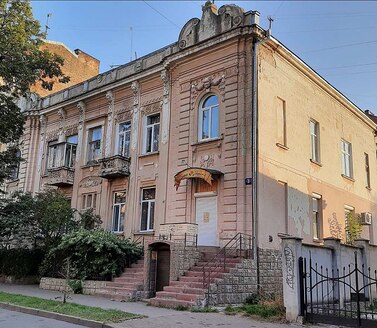
The tenement house of Yitzhak Mayer Horowitz
chak Mayer Horowitz came from one of the two most influential Jewish ...
The complex of tenement houses No. 4, 6, 8, 10 - an architectural monument of local importance - was the famous Hasidic court of the Hager tzaddiks/righteous men of the region, a Hasidic dynasty that traced its roots to the tzaddik Besht.
The complex of private tenements No. 4, 6, 8, 10 (until 1939 - Batorogo St., now - Korolya Danyla) in Stanislavov was the Hasidic court of the Otinia rabbis (Otinia-Rebbe) - tzaddik Hager, known in the region.
Almost every Galician shtetl had its own Hasidic dynasty, which traced its roots to the Baal Shem Tov (Tzadik Besht). It was in Halychyna that a number of the most famous courts of tzaddik (righteous) Hasids were founded. A famous and active dynasty of rabbis, the Kosiv Hasidic dynasty in Brooklyn, has its roots from here, where it has its synagogues. The dynasty also has a Kosovan synagogue in northern Israel, high in the mountains that resemble the Carpathians, near the city of Safed.
At one time, the Vyzhnytsk Hasidic dynasty, known for its miracle workers, emerged from the Kosiv Hasidic dynasty, the most famous in the world. Her lineage: Rabbi Baal Shem Tov (Israel Ben Eliezer, 1698–1760), known as Besht), his student Rabbi Yaakov Kopel Hasid, Grand Rabbi Menachem Mendel Gager of Kosovo, Grand Rabbi Chaim Gager of Kosovo, Grand Rabbi Yaakov Simson Gager of Kosova, Yosef Alter from Radovitz, Menachem Mendel Gager from Vyzhnytsia and others.
The complex of private tenements No. 4, 6, 8, 10 (until 1939 - Batorogo St., now - Korolya Danyla) in Stanislavov was the Hasidic court of the Otinia rabbis (Otinia-Rebbe) - tzaddik Hager, known in the region.
Almost every Galician shtetl had its own Hasidic dynasty, which traced its roots to the Baal Shem Tov (Tzadik Besht). It was in Halychyna that a number of the most famous courts of tzaddik (righteous) Hasids were founded. A famous and active dynasty of rabbis, the Kosiv Hasidic dynasty in Brooklyn, has its roots from here, where it has its synagogues. The dynasty also has a Kosovan synagogue in northern Israel, high in the mountains that resemble the Carpathians, near the city of Safed.
At one time, the Vyzhnytsk Hasidic dynasty, known for its miracle workers, emerged from the Kosiv Hasidic dynasty, the most famous in the world. Her lineage: Rabbi Baal Shem Tov (Israel Ben Eliezer, 1698–1760), known as Besht), his student Rabbi Yaakov Kopel Hasid, Grand Rabbi Menachem Mendel Gager of Kosovo, Grand Rabbi Chaim Gager of Kosovo, Grand Rabbi Yaakov Simson Gager of Kosova, Yosef Alter from Radovitz, Menachem Mendel Gager from Vyzhnytsia and others.
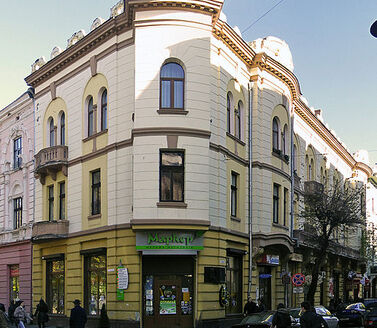
chak Mayer Horowitz came from one of the two most influential Jewish ...
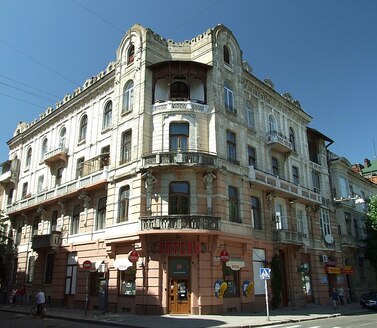
In 1912, at the corner of Golukhovsky (now Chornovola) and Giller (now ...

Historically, "the main Jewish world stretched between Halytska and ...
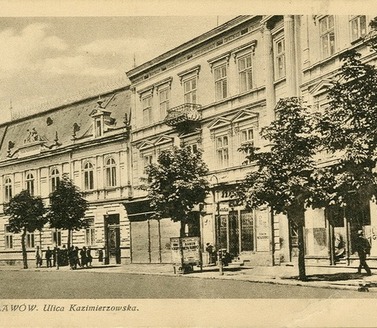
Kamianitsa on the modern street. Mazepy 12 was built 125 years ago. Its ...
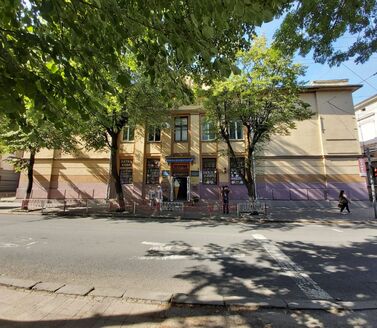
Synagogue on St. Sobieskiho, 28 (now - Sichovy Streltsiv) belonged to the ...
Yakov Margoshes was a well-known entrepreneur in Galicia.
The leather ...
The dynasty gave Vyzhnytskyi rabbis for Otynia, Stanislavov, Storozhynets, Haifa, Sereta.
The founder of the Vyzhnytsk Hasidic dynasty and the progenitor of the Hager dynasty is the great Rabbi Menachem Mendel Hager from Kosovo, the author of the treatise "Love for Peace".
The first Rebbe in Stanislavov from this dynasty was the founder of the Hasidic court in Otynia in 1893, Rebbe Chaim Hager (1863–1932) - the son of the famous Vyzhnytsky tzaddik Boruch Hager and the grandson of the Vyzhnytskyi Rebbe Menachem-Mendl Hager.
After his death in 1932, his son Israel became the second Otinia tzaddik. Israel Sholom-Yosif Hager - the second Otinia Rebbe (1884–1944). Both were highly educated people, they left behind famous religious works - "The Soul of Isaiah" and "The Life of Chaim". Buried at the Jewish cemetery.
The Otynia Rebbe Chaim Hager, whose residence was burned down by the Russians during the horrors of the First World War, after a forced evacuation, nevertheless returned from Vienna to Galicia after the war and settled in Stanislavov.
With the arrival of a tzaddik - a famous rabbi-teacher, spiritual guide - in Stanislavov, the Otinia Hasidic court was established. At the court, there were: cheder (religious primary school), yeshiva (higher Jewish religious educational institution, which trained rabbis).
Otinia-Rebbe Hager settled in the two-story house No. 8, which belonged to the wealthy Jewish philanthropist Edward Mahler. The building was built in the mid-1910s with Gothic elements. According to the documents and data of the local historian M. Holovaty, a synagogue was located in building No. 8.
Townhouse No. 10, which resembles a magnificent villa, was built in 1910-1912 by Mr. Zaslavskyi. The house in the historicist style had a complex configuration, had two high multifaceted towers and a massive stone staircase. According to Rebbe Moishe-Leib Kolesnyka, the Hagers also bought "that house with the pin where the dispensary is."
"Rebbe Hager was a tzaddik - the spiritual leader of a religious group. There were numerous synagogues of the Otinian Hasids in Kolomyia, Nadvirnia, Bukovina, and Bessarabia, but the center was located in Stanislavov, where their teacher lived. Once a year, on a major Jewish holiday, pilgrims flocked to the house on Batory Street to listen to their rebbe's sermons. Among the Jews, it was believed that even just seeing a tzaddik is already a great blessing."
In 1926, the Hager family built their own shrine - a synagogue - at the Hasidic court (now 6 Korolya Danyla St.). She was accompanied by a cheder and a yeshiva. According to the documents of 1938, the synagogue in which Hager Izrael held services is listed at the address of Batoroy, 8. The house was privately owned by the rabbi.
There is evidence that with the financial support of Hillel Mahler, a charitable institution for the homeless operated in several rooms of tenement house No. 8.
In the 1930s, the Jewish student society "Bar Kochba" operated in Stanislaviv at 10 Batoroy Street.
Rabbi Hagery, together with Rabbi Nebenzali, led the movement of Orthodox Jews in Stanislaviv. The branch of the party of Orthodox Jews "Aghudas Israel" (Union of Israel), headed by Yitzhak Bergman, counted 800 members in the city in 1935. The "Yeshiva Or Torah" and "Talmud Torah" educational institutions, as well as the trade union cooperative fund, were completely under the influence of the Orthodox from Agudas Israel. In part, the influence of "Agudas Israel" extended to thirteen more religious, charitable, and humanitarian societies of Stanislavov.
Rabbi Hager, along with Rabbi Nebenzal and Rabbi Bertish, belonged to a group of influential religious and social figures in the city who served on the governing bodies of many societies, primarily trustees and charities.
During the German occupation, the street was called Torfova, and was the western border of the ghetto. There was a dense fence, barbed wire. It was forbidden to open the windows of the first floors.
During the implementation of the policy of genocide of the Jews by the Nazis of the Third Reich, the rabbis were among the first to fall under the flywheel of destruction. The faithful made incredible efforts to save the rabbis. In the interview of the chief rabbi of the Ivano-Frankivsk region, Moishe-Leib Kolesnik, there are numerous facts that took place in Stanislav, according to the memories of eyewitnesses of those events who managed to survive the Holocaust: "The famous rabbi - the second Otiny Rebbe Israel Sholom-Yosif Hager was hiding with seven in the basement in the bunker on the street. Kazimirivska (now Mazepa St., near the notary's office). When the child was playing in the yard [which was near this place on the side of the street. Batorogo] to see the sun and breathe the air, someone reported to the Germans. Gestapo officers usually did not dare to enter the bunker. They bargained for a long time - the family gave all the money, but the Nazis still threw a grenade into the bunker. At night, someone pulled out the bodies mutilated by the explosion from the bunker and buried them in the Jewish cemetery next to his father, the famous Otinia Rebbe Boruch Hager. When, during one of the actions at the Jewish cemetery, Stanislav's daughter Otynia the Rebbe flatly refused to undress, a separate grave was dug for her and she was buried alive..."
In the ghetto, together with the Otynia Rebbe, the family of the wealthy and well-known Dulberg family in Stanislav and Otynia hid in a cramped room in the ghetto: the merchant David (who was educated in Vienna and engaged in international leather trade), his wife Fani (from Gvizdets, a graduate of Lviv University ), 7-year-old daughter Marisha (born in 1934) and 9-month-old son Kopale. Behind the double wall was a secret shelter for children. When Marisha wept profusely, the Otinia Rebbe, laying his hands on her, said: "Of all those in this room, only you will remain alive. Know that when the clouds thicken, when it seems to you that the end of the world is coming and there is impenetrable darkness around you, the heavens will open for you..."
About these tragic events of the Holocaust, the film "The Heavens will open for you" was made. The autobiographical story of the resistance of the little girl Malka Rosenthal (nee Marisha Dulberg) in bunkers, forests, barns and even a barrel, which she told in the autobiographical story "Marisha", became the basis for many works about the Holocaust, including educational ones for children and young people. translated into different languages. Carpathian Malka Rosenthal is an honored participant in numerous government events, educational seminars, meetings in Israel and abroad to commemorate the victims of the Holocaust. In the crucible of the Holocaust, where she was 7 years old, she lost her 9-month-old brother Kopale, who was taken care of by the Nazis and whose head was broken by the Nazis. She and her mother were helped to get out of the ghetto by Denisa's nanny, who, risking her own life, first infiltrated them into the ghetto territory through secret passages.
The decision of the city executive committee dated 26.12.1945 on the transfer of the synagogue on the street. Batorogo, 6 for lease ... NKVD. During the "Red Terror" the flywheel of Soviet repression, aimed at Ukrainians, was already working here. Currently, these buildings No. 4, 6, 8, 10 are occupied by the Communal Institution "Ivano-Frankivsk Regional Clinical Skin and Venereological Dispensary". All of them are classified as architectural monuments of local significance.
The dynasty gave Vyzhnytskyi rabbis for Otynia, Stanislavov, Storozhynets, Haifa, Sereta.
The founder of the Vyzhnytsk Hasidic dynasty and the progenitor of the Hager dynasty is the great Rabbi Menachem Mendel Hager from Kosovo, the author of the treatise "Love for Peace".
The first Rebbe in Stanislavov from this dynasty was the founder of the Hasidic court in Otynia in 1893, Rebbe Chaim Hager (1863–1932) - the son of the famous Vyzhnytsky tzaddik Boruch Hager and the grandson of the Vyzhnytskyi Rebbe Menachem-Mendl Hager.
After his death in 1932, his son Israel became the second Otinia tzaddik. Israel Sholom-Yosif Hager - the second Otinia Rebbe (1884–1944). Both were highly educated people, they left behind famous religious works - "The Soul of Isaiah" and "The Life of Chaim". Buried at the Jewish cemetery.
The Otynia Rebbe Chaim Hager, whose residence was burned down by the Russians during the horrors of the First World War, after a forced evacuation, nevertheless returned from Vienna to Galicia after the war and settled in Stanislavov.
With the arrival of a tzaddik - a famous rabbi-teacher, spiritual guide - in Stanislavov, the Otinia Hasidic court was established. At the court, there were: cheder (religious primary school), yeshiva (higher Jewish religious educational institution, which trained rabbis).
Otinia-Rebbe Hager settled in the two-story house No. 8, which belonged to the wealthy Jewish philanthropist Edward Mahler. The building was built in the mid-1910s with Gothic elements. According to the documents and data of the local historian M. Holovaty, a synagogue was located in building No. 8.
Townhouse No. 10, which resembles a magnificent villa, was built in 1910-1912 by Mr. Zaslavskyi. The house in the historicist style had a complex configuration, had two high multifaceted towers and a massive stone staircase. According to Rebbe Moishe-Leib Kolesnyka, the Hagers also bought "that house with the pin where the dispensary is."
"Rebbe Hager was a tzaddik - the spiritual leader of a religious group. There were numerous synagogues of the Otinian Hasids in Kolomyia, Nadvirnia, Bukovina, and Bessarabia, but the center was located in Stanislavov, where their teacher lived. Once a year, on a major Jewish holiday, pilgrims flocked to the house on Batory Street to listen to their rebbe's sermons. Among the Jews, it was believed that even just seeing a tzaddik is already a great blessing."
In 1926, the Hager family built their own shrine - a synagogue - at the Hasidic court (now 6 Korolya Danyla St.). She was accompanied by a cheder and a yeshiva. According to the documents of 1938, the synagogue in which Hager Izrael held services is listed at the address of Batoroy, 8. The house was privately owned by the rabbi.
There is evidence that with the financial support of Hillel Mahler, a charitable institution for the homeless operated in several rooms of tenement house No. 8.
In the 1930s, the Jewish student society "Bar Kochba" operated in Stanislaviv at 10 Batoroy Street.
Rabbi Hagery, together with Rabbi Nebenzali, led the movement of Orthodox Jews in Stanislaviv. The branch of the party of Orthodox Jews "Aghudas Israel" (Union of Israel), headed by Yitzhak Bergman, counted 800 members in the city in 1935. The "Yeshiva Or Torah" and "Talmud Torah" educational institutions, as well as the trade union cooperative fund, were completely under the influence of the Orthodox from Agudas Israel. In part, the influence of "Agudas Israel" extended to thirteen more religious, charitable, and humanitarian societies of Stanislavov.
Rabbi Hager, along with Rabbi Nebenzal and Rabbi Bertish, belonged to a group of influential religious and social figures in the city who served on the governing bodies of many societies, primarily trustees and charities.
During the German occupation, the street was called Torfova, and was the western border of the ghetto. There was a dense fence, barbed wire. It was forbidden to open the windows of the first floors.
During the implementation of the policy of genocide of the Jews by the Nazis of the Third Reich, the rabbis were among the first to fall under the flywheel of destruction. The faithful made incredible efforts to save the rabbis. In the interview of the chief rabbi of the Ivano-Frankivsk region, Moishe-Leib Kolesnik, there are numerous facts that took place in Stanislav, according to the memories of eyewitnesses of those events who managed to survive the Holocaust: "The famous rabbi - the second Otiny Rebbe Israel Sholom-Yosif Hager was hiding with seven in the basement in the bunker on the street. Kazimirivska (now Mazepa St., near the notary's office). When the child was playing in the yard [which was near this place on the side of the street. Batorogo] to see the sun and breathe the air, someone reported to the Germans. Gestapo officers usually did not dare to enter the bunker. They bargained for a long time - the family gave all the money, but the Nazis still threw a grenade into the bunker. At night, someone pulled out the bodies mutilated by the explosion from the bunker and buried them in the Jewish cemetery next to his father, the famous Otinia Rebbe Boruch Hager. When, during one of the actions at the Jewish cemetery, Stanislav's daughter Otynia the Rebbe flatly refused to undress, a separate grave was dug for her and she was buried alive..."
In the ghetto, together with the Otynia Rebbe, the family of the wealthy and well-known Dulberg family in Stanislav and Otynia hid in a cramped room in the ghetto: the merchant David (who was educated in Vienna and engaged in international leather trade), his wife Fani (from Gvizdets, a graduate of Lviv University ), 7-year-old daughter Marisha (born in 1934) and 9-month-old son Kopale. Behind the double wall was a secret shelter for children. When Marisha wept profusely, the Otinia Rebbe, laying his hands on her, said: "Of all those in this room, only you will remain alive. Know that when the clouds thicken, when it seems to you that the end of the world is coming and there is impenetrable darkness around you, the heavens will open for you..."
About these tragic events of the Holocaust, the film "The Heavens will open for you" was made. The autobiographical story of the resistance of the little girl Malka Rosenthal (nee Marisha Dulberg) in bunkers, forests, barns and even a barrel, which she told in the autobiographical story "Marisha", became the basis for many works about the Holocaust, including educational ones for children and young people. translated into different languages. Carpathian Malka Rosenthal is an honored participant in numerous government events, educational seminars, meetings in Israel and abroad to commemorate the victims of the Holocaust. In the crucible of the Holocaust, where she was 7 years old, she lost her 9-month-old brother Kopale, who was taken care of by the Nazis and whose head was broken by the Nazis. She and her mother were helped to get out of the ghetto by Denisa's nanny, who, risking her own life, first infiltrated them into the ghetto territory through secret passages.
The decision of the city executive committee dated 26.12.1945 on the transfer of the synagogue on the street. Batorogo, 6 for lease ... NKVD. During the "Red Terror" the flywheel of Soviet repression, aimed at Ukrainians, was already working here. Currently, these buildings No. 4, 6, 8, 10 are occupied by the Communal Institution "Ivano-Frankivsk Regional Clinical Skin and Venereological Dispensary". All of them are classified as architectural monuments of local significance.