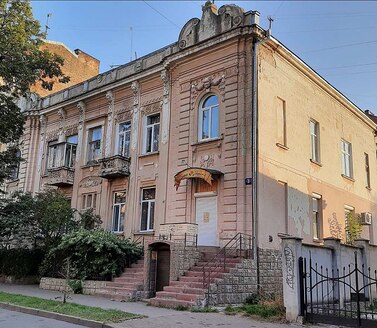
The tenement house of Yitzhak Mayer Horowitz
chak Mayer Horowitz came from one of the two most influential Jewish ...
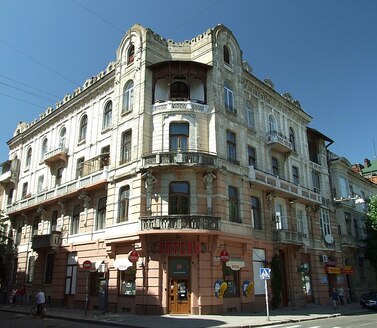
Kamianitsa on the modern street. Mazepy 12 was built 125 years ago. Its owner was a wealthy Jewish merchant, Oziash Gottesman. In the documents, it appears as profitable, but there is one piquant nuance. Urban folklore claims that there was... a brothel. Local historians can neither deny nor confirm this fact, and in general, the initial history of the building is shrouded in darkness, the "Reporter" wrote.
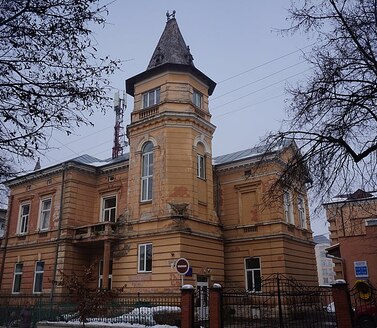
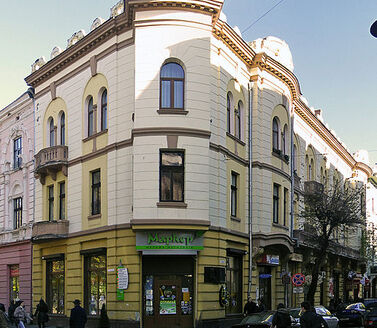
We do not know exactly what kind of business Gottesman was engaged in, but he was not in trouble. He bought a nearby small plot with a parterre (one-story) house, on which he built a tenement house in 1896. It looked like the right wing of number 12, although, in fact, it is a separate building (Mazepy, 10, the former first private female gymnasium named after Eliza Ozheshko). The entire building is made in a single style and has a common concave facade due to the turn of the street.
Kamianitsa on the modern street. Mazepy 12 was built 125 years ago. Its owner was a wealthy Jewish merchant, Oziash Gottesman. In the documents, it appears as profitable, but there is one piquant nuance. Urban folklore claims that there was... a brothel. Local historians can neither deny nor confirm this fact, and in general, the initial history of the building is shrouded in darkness, the "Reporter" wrote.
We do not know exactly what kind of business Gottesman was engaged in, but he was not in trouble. He bought a nearby small plot with a parterre (one-story) house, on which he built a tenement house in 1896. It looked like the right wing of number 12, although, in fact, it is a separate building (Mazepy, 10, the former first private female gymnasium named after Eliza Ozheshko). The entire building is made in a single style and has a common concave facade due to the turn of the street.
chak Mayer Horowitz came from one of the two most influential Jewish ...
The complex of private tenements No. 4, 6, 8, 10 (until 1939 - Batorogo St., ...
In 1912, at the corner of Golukhovsky (now Chornovola) and Giller (now ...
Historically, "the main Jewish world stretched between Halytska and ...
Synagogue on St. Sobieskiho, 28 (now - Sichovy Streltsiv) belonged to the ...
Yakov Margoshes was a well-known entrepreneur in Galicia.
The leather ...
In addition to the traditional rented apartments, in the right wing, for several years (until the middle of 1908), the Stanislaviv branch of "Prosvity" was located. In 1912, Gottesman sold both houses to the firm. The cost of the equipment was 324,000 crowns. Then he changed his mind, wanted to return the money and keep the tenements for himself. It went to court, as a result, the real estate remained with Weidenfeld.
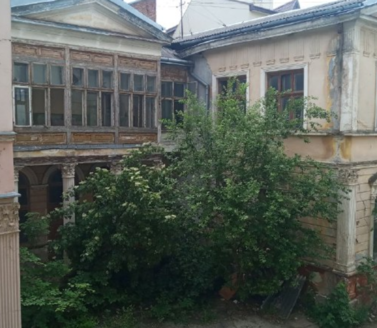
Eisig Weidenfeld began a stormy activity. During 1912-13, a large extension was made on the side of the yard, where a printing house and a cinema hall with 300 seats were located. At first, the cinema did not have its own name and the audience simply said - "let's go to Weidenfeld". It should be noted that both the one-story Art Nouveau lobby and the auditorium were designed by the talented architect Jan Kudelskyi.
The leasing of part of the premises under the representative office of "Union Bank" during the years 1912-1921 brought a good profit. But the basis of the business was a printing house and a bookstore. In the days of ZUNR, the newspapers "Republika" (that's how the word was spelled at the time) and "New Life" were printed here.
After the war, the cinema stopped working, but a new institution opened in the front premises, with which the majority of residents associated the entire tenement house. From 1921 until the Soviet era, there was a Polish girls' gymnasium named after Eliza Ohrzeshko. In 1930, Weidenfeld also opened a cinema, called it "Paradise", and in August 1936 renamed it "Casino". The Weidenfelds owned a united tenement until the beginning of 1940...
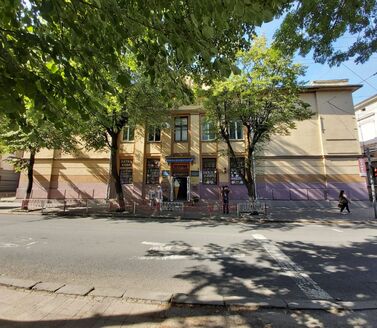
After the Second World War, various educational institutions worked in the building. Currently, it is the art faculty of Prykarpattia University. If you look closely, you can see the memorial plaque on the wall of the right wing, which was opened in 2001, in the modern photo. The inscription there is as follows: "From 1983 to 1999, Honored Artist of Ukraine, Doctor of Art History, Professor Mykhailo Figol worked in this building." The artist became famous for his canvases from the history of ancient Halych. The authors of the board are sculptors Yuriy Mysko and Oleksiy Figol - the artist's son.
Like most old buildings, the Gottesmann-Weidenfeld tenement has lost something and gained something. Among the losses are spherical decorations near the attic on the roof. The property is the wrought-iron grilles of the first floor, installed in 1996.
In addition to the traditional rented apartments, in the right wing, for several years (until the middle of 1908), the Stanislaviv branch of "Prosvity" was located. In 1912, Gottesman sold both houses to the firm. The cost of the equipment was 324,000 crowns. Then he changed his mind, wanted to return the money and keep the tenements for himself. It went to court, as a result, the real estate remained with Weidenfeld.
Eisig Weidenfeld began a stormy activity. During 1912-13, a large extension was made on the side of the yard, where a printing house and a cinema hall with 300 seats were located. At first, the cinema did not have its own name and the audience simply said - "let's go to Weidenfeld". It should be noted that both the one-story Art Nouveau lobby and the auditorium were designed by the talented architect Jan Kudelskyi.
The leasing of part of the premises under the representative office of "Union Bank" during the years 1912-1921 brought a good profit. But the basis of the business was a printing house and a bookstore. In the days of ZUNR, the newspapers "Republika" (that's how the word was spelled at the time) and "New Life" were printed here.
After the war, the cinema stopped working, but a new institution opened in the front premises, with which the majority of residents associated the entire tenement house. From 1921 until the Soviet era, there was a Polish girls' gymnasium named after Eliza Ohrzeshko. In 1930, Weidenfeld also opened a cinema, called it "Paradise", and in August 1936 renamed it "Casino". The Weidenfelds owned a united tenement until the beginning of 1940...
After the Second World War, various educational institutions worked in the building. Currently, it is the art faculty of Prykarpattia University. If you look closely, you can see the memorial plaque on the wall of the right wing, which was opened in 2001, in the modern photo. The inscription there is as follows: "From 1983 to 1999, Honored Artist of Ukraine, Doctor of Art History, Professor Mykhailo Figol worked in this building." The artist became famous for his canvases from the history of ancient Halych. The authors of the board are sculptors Yuriy Mysko and Oleksiy Figol - the artist's son.
Like most old buildings, the Gottesmann-Weidenfeld tenement has lost something and gained something. Among the losses are spherical decorations near the attic on the roof. The property is the wrought-iron grilles of the first floor, installed in 1996.