The tenement house of Yitzhak Mayer Horowitz
chak Mayer Horowitz came from one of the two most influential Jewish ...
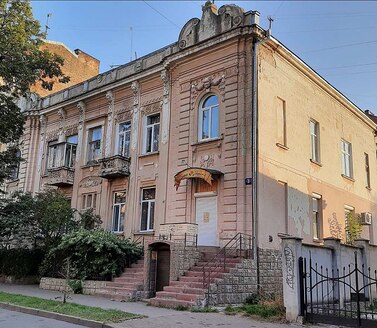
Synagogue on St. Sobieskiho, 28 (now - Sichovy Streltsiv) belonged to the Foundation of the building. Khan Lyanda Horowitz, as it was built at her expense. Hebrew prayer courses for children were held at the synagogue.
Hana Horowitz was an entrepreneur, owned a large store and donated a lot of money to charity every year.
The Horowitzes belonged to the rabbinical dynasty founded in Stanislav by Rabbi Aryeh Leibish ben Eliezer Halevi Horowitz (1758–1844, great-grandson of Rabbi Yitzhak Horowitz, rabbi of Hamburg) who served in the city since 1784. Rabbi Zvi Hirsch Horowitz, known as Rabbi Hirsheli, is considered by Jewish tradition gaons - prominent experts in Jewish law. "There were many legends, almost fairy tales, about such rabbis as Rabbi Zvi Hirsh Horowitz... As Torah scholars and pious people, they were recognized throughout the Jewish world. Rabbi Yehezkiel from Prague wrote about the "three pillars" on which the Jewish world of that time stood: "Rabbi Yitzhak from Lviv, Rabbi Zvi Hirsch from Chortkov, and Rabbi from Stanislavov." In the 20s and 30s of the XX century. the rabbi was David Halevi Horowitz. Rabbi Moshe from Vienna - Stanislavov's last rabbi - died at the hands of the Nazis on August 3, 1941.
Hana Horowitz came from the respected and well-known Halpern family, which played a leading role in the political life of Galicia and in the leadership of the community from the beginning of the 19th century. until the 1930s. Among the influential representatives of the Halpern family: a member of the Austrian Parliament in 1848 from Stanislavov, Avraham Halpern (son of the famous 19th-century merchant J. Halpern), organizer of the Jewish unit of the National Guard during the "Spring of Nations" - the revolution of 1848–1849; the head of the Jewish National Council, Karol Halpern, who actively supported the Western Ukrainian People's Republic, and in the 1930s headed the most numerous associations of the city - the Jewish Council for the Care of Orphans and "Ahavat Hesed Gmilat Hasadim"; community leaders Anselm and Hersh Halperny; Karol Halpern, head of the board of the Jewish community in 1919–1925. In 1873, almost half of the members of the Stanislavov municipality belonged to the Jewish community, and in 1923, Jews held 13 out of 36 seats in the municipal council. The Halperns, together with the dynastic rabbinical family of Horovitsy, were the most influential in the city of Stanislaviv. Representatives of their families were members of the governing bodies of many Stanislavov Jewish societies, especially charitable and guardian ones.
Synagogue on St. Sobieskiho, 28 (now - Sichovy Streltsiv) belonged to the Foundation of the building. Khan Lyanda Horowitz, as it was built at her expense. Hebrew prayer courses for children were held at the synagogue.
Hana Horowitz was an entrepreneur, owned a large store and donated a lot of money to charity every year.
The Horowitzes belonged to the rabbinical dynasty founded in Stanislav by Rabbi Aryeh Leibish ben Eliezer Halevi Horowitz (1758–1844, great-grandson of Rabbi Yitzhak Horowitz, rabbi of Hamburg) who served in the city since 1784. Rabbi Zvi Hirsch Horowitz, known as Rabbi Hirsheli, is considered by Jewish tradition gaons - prominent experts in Jewish law. "There were many legends, almost fairy tales, about such rabbis as Rabbi Zvi Hirsh Horowitz... As Torah scholars and pious people, they were recognized throughout the Jewish world. Rabbi Yehezkiel from Prague wrote about the "three pillars" on which the Jewish world of that time stood: "Rabbi Yitzhak from Lviv, Rabbi Zvi Hirsch from Chortkov, and Rabbi from Stanislavov." In the 20s and 30s of the XX century. the rabbi was David Halevi Horowitz. Rabbi Moshe from Vienna - Stanislavov's last rabbi - died at the hands of the Nazis on August 3, 1941.
Hana Horowitz came from the respected and well-known Halpern family, which played a leading role in the political life of Galicia and in the leadership of the community from the beginning of the 19th century. until the 1930s. Among the influential representatives of the Halpern family: a member of the Austrian Parliament in 1848 from Stanislavov, Avraham Halpern (son of the famous 19th-century merchant J. Halpern), organizer of the Jewish unit of the National Guard during the "Spring of Nations" - the revolution of 1848–1849; the head of the Jewish National Council, Karol Halpern, who actively supported the Western Ukrainian People's Republic, and in the 1930s headed the most numerous associations of the city - the Jewish Council for the Care of Orphans and "Ahavat Hesed Gmilat Hasadim"; community leaders Anselm and Hersh Halperny; Karol Halpern, head of the board of the Jewish community in 1919–1925. In 1873, almost half of the members of the Stanislavov municipality belonged to the Jewish community, and in 1923, Jews held 13 out of 36 seats in the municipal council. The Halperns, together with the dynastic rabbinical family of Horovitsy, were the most influential in the city of Stanislaviv. Representatives of their families were members of the governing bodies of many Stanislavov Jewish societies, especially charitable and guardian ones.
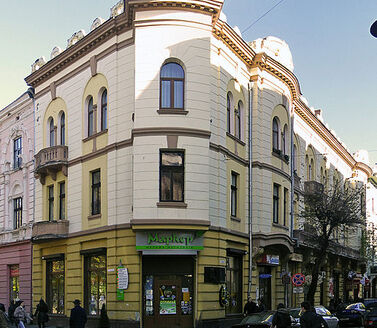
chak Mayer Horowitz came from one of the two most influential Jewish ...
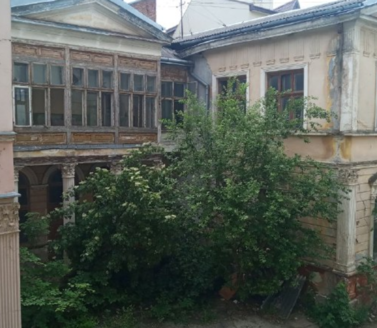
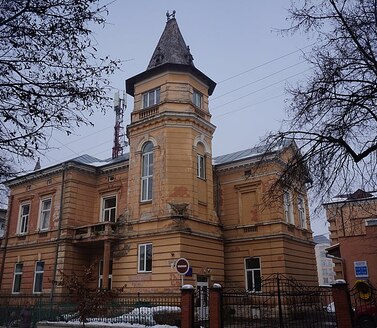
The complex of private tenements No. 4, 6, 8, 10 (until 1939 - Batorogo St., ...
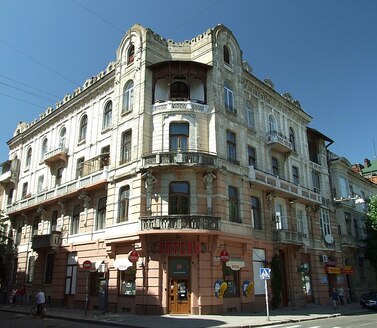
In 1912, at the corner of Golukhovsky (now Chornovola) and Giller (now ...

Historically, "the main Jewish world stretched between Halytska and ...
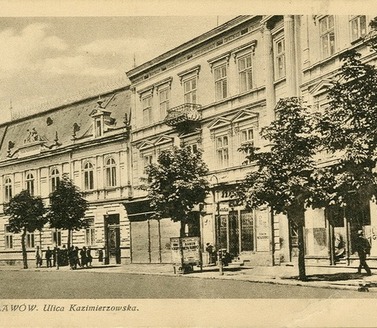
Kamianitsa on the modern street. Mazepy 12 was built 125 years ago. Its ...
Yakov Margoshes was a well-known entrepreneur in Galicia.
The leather ...
Achawat Chesed Gmilath Chasudim charity society was one of the largest in the city and had 1,500 members. Registered by the Stanislavsky County Eldership on November 26, 1908. Its founders were Leib Zweig and Hana Horowitz. The purpose of the association, first of all, was mutual assistance and improvement of the material well-being of the members. The society provided interest-free loans, provided the needy with housing and food, took care of small traders and entrepreneurs - representatives of small businesses, supported the middle class, for which it gained almost the most popularity among the Jewish societies of the city.
The history of the Hana Horowitz Synagogue is closely related to the pages of history about the revival (literally from the ashes after the Nazi occupation of the city) of the Jewish community at the end of 1944 and its mysterious "disappearance" in 1950 (during the Soviet totalitarianism).
If in the interwar period of 1919–1939 the number of communities on the territory of the Stanislav Voivodeship was 51, and on the territory of the current Ivano-Frankivsk Oblast - 43, after the war only one Jewish community - Stanislavska - tried to officially resume its activities.
After the liberation from the Nazis in July 1944, 76 Jews were registered in the city, and in August - September - 150. For comparison: by 1941, the number of Jews in the region was up to 150,000, and in the city - more than 30,000. 150 out of 150 thousand... were those "disappeared" who survived the hell of the Holocaust in bunkers, dugouts, stables, barns, attics, storerooms and cells and other hiding places. In October - November 1944, the number of Jews in the city was 228-236, as of April 19, 1947 - 1962, and in 1959 - 2,100 people. The majority returned from the fronts of the Second World War, evacuations, Jews from other regions of the USSR also arrived in the region.
For those who survived the Holocaust, it was important not only to fix their own lives, but also to restore the organizational form of Jewish existence - the community. And as the documents show, such an attempt to organize the Jewish community in Stanislav was made in 1946–1947. The State Archives of the Ivano-Frankivsk region preserved: statement of the Jews of Stanislav dated September 8, 1946 about voluntary association; a request for the registration of their religious community and the free transfer of the synagogue on St. Chapaeva (now - Sichovy Striltsiv St.), 28; election protocol and lists of members of the community's executive and revision committees (1946); minutes of the meeting of members of the community on February 16, 1947, at which the issue of transferring the synagogue, registration of the community was discussed, rabbi elections were held, members of commissions for the renovation of the synagogue were elected, etc. There is a decision of the regional executive committee and the city executive committee dated 06.31.1941 and 07.31.1946 to issue a permit for the establishment of a Jewish community in Stanislaus and the opening of the street. Chapaeva, 28 synagogue. And in 1946–1947 officially, and in 1948–1950 – underground, the only synagogue in the city operated in this building.
For collecting funds for the reconstruction and repair of the synagogue, charitable purposes, in particular, to provide financial assistance to the community, to needy Jews, orphans whose parents died in the ghetto, etc. a group of Jewish teachers of the medical institute was qualified as "a group of Jewish nationalists operating among the teaching staff", "exposed and expelled from the medical institute". In the archive, we found a group of documents from 1949–1950, which we combined under the tentative name "Stanislavsk case of doctors". This "case of doctors", according to the memories of old residents, was directly related to the destruction of the Jewish community. The documents show: "It is equally hostile to us that Ukrainian nationalists who want to revive and be independent, that Jews want to stand out on their own..." (from the speech of the first secretary of the Stanislavsky regional committee of the CP(b)U). An expression characteristic of the national (rather anti-national) policy of the period of Soviet totalitarianism, which illustrated that the main task of the system was to fight against any manifestations of otherness - whether Ukrainian or Jewish.
Subsequently, the Stanislav City Executive Committee made a decision on October 8, 1947 to provide the Jewish community with premises for a synagogue already on the street. Grabarska, 10, and the synagogue on St. Chapaeva, 28 will be transferred first to the medical workers' club.
At the end of 1947, another appeal of the initiative group of the Jewish community to the authorities about the registration and transfer of the synagogue was answered that there was "neither extreme necessity nor political expediency."
According to the assessment of the well-known researcher of the religious situation in the Carpathian region, professor I. O. Andruhiv, "the policy of the Soviet government ... was aimed at the gradual "self-liquidation" of communities of the Roman Catholic and Jewish faiths in various ways, not only in Stanislavsk, but also in other western regions of Ukraine."
The disappearance at the end of 1948–1949 of information about the legal activities of the Stanislav Jewish community, its liquidation on the territory of the UGCC region, serves as a direct confirmation that the goal of the Soviet government was the "self-liquidation" of ethno-religious denominations.
Initiative members of the Jewish community, which did operate underground, and who once again gathered for prayer in the early 1950s in this building, where an underground synagogue operated, simply disappeared... That is, the last point in the termination of the legal activity of the Jewish community in the city was not put by the Nazis , and the policy of Soviet state anti-Semitism. These processes went in parallel with the struggle of the authorities with the Ukrainian national liberation movement and the liquidation of the Ukrainian Greek Catholic Church.
The Soviet authorities were more interested in the premises of defunct synagogues, with the aim of "developing" them. in the so-called "national and economic goals". The warehouse of the regional publishing house was located in this building, and in 1952 it was transferred to the regional branch of the Ukrainian Society of the Deaf and Dumb as a cultural center.
Achawat Chesed Gmilath Chasudim charity society was one of the largest in the city and had 1,500 members. Registered by the Stanislavsky County Eldership on November 26, 1908. Its founders were Leib Zweig and Hana Horowitz. The purpose of the association, first of all, was mutual assistance and improvement of the material well-being of the members. The society provided interest-free loans, provided the needy with housing and food, took care of small traders and entrepreneurs - representatives of small businesses, supported the middle class, for which it gained almost the most popularity among the Jewish societies of the city.
The history of the Hana Horowitz Synagogue is closely related to the pages of history about the revival (literally from the ashes after the Nazi occupation of the city) of the Jewish community at the end of 1944 and its mysterious "disappearance" in 1950 (during the Soviet totalitarianism).
If in the interwar period of 1919–1939 the number of communities on the territory of the Stanislav Voivodeship was 51, and on the territory of the current Ivano-Frankivsk Oblast - 43, after the war only one Jewish community - Stanislavska - tried to officially resume its activities.
After the liberation from the Nazis in July 1944, 76 Jews were registered in the city, and in August - September - 150. For comparison: by 1941, the number of Jews in the region was up to 150,000, and in the city - more than 30,000. 150 out of 150 thousand... were those "disappeared" who survived the hell of the Holocaust in bunkers, dugouts, stables, barns, attics, storerooms and cells and other hiding places. In October - November 1944, the number of Jews in the city was 228-236, as of April 19, 1947 - 1962, and in 1959 - 2,100 people. The majority returned from the fronts of the Second World War, evacuations, Jews from other regions of the USSR also arrived in the region.
For those who survived the Holocaust, it was important not only to fix their own lives, but also to restore the organizational form of Jewish existence - the community. And as the documents show, such an attempt to organize the Jewish community in Stanislav was made in 1946–1947. The State Archives of the Ivano-Frankivsk region preserved: statement of the Jews of Stanislav dated September 8, 1946 about voluntary association; a request for the registration of their religious community and the free transfer of the synagogue on St. Chapaeva (now - Sichovy Striltsiv St.), 28; election protocol and lists of members of the community's executive and revision committees (1946); minutes of the meeting of members of the community on February 16, 1947, at which the issue of transferring the synagogue, registration of the community was discussed, rabbi elections were held, members of commissions for the renovation of the synagogue were elected, etc. There is a decision of the regional executive committee and the city executive committee dated 06.31.1941 and 07.31.1946 to issue a permit for the establishment of a Jewish community in Stanislaus and the opening of the street. Chapaeva, 28 synagogue. And in 1946–1947 officially, and in 1948–1950 – underground, the only synagogue in the city operated in this building.
For collecting funds for the reconstruction and repair of the synagogue, charitable purposes, in particular, to provide financial assistance to the community, to needy Jews, orphans whose parents died in the ghetto, etc. a group of Jewish teachers of the medical institute was qualified as "a group of Jewish nationalists operating among the teaching staff", "exposed and expelled from the medical institute". In the archive, we found a group of documents from 1949–1950, which we combined under the tentative name "Stanislavsk case of doctors". This "case of doctors", according to the memories of old residents, was directly related to the destruction of the Jewish community. The documents show: "It is equally hostile to us that Ukrainian nationalists who want to revive and be independent, that Jews want to stand out on their own..." (from the speech of the first secretary of the Stanislavsky regional committee of the CP(b)U). An expression characteristic of the national (rather anti-national) policy of the period of Soviet totalitarianism, which illustrated that the main task of the system was to fight against any manifestations of otherness - whether Ukrainian or Jewish.
Subsequently, the Stanislav City Executive Committee made a decision on October 8, 1947 to provide the Jewish community with premises for a synagogue already on the street. Grabarska, 10, and the synagogue on St. Chapaeva, 28 will be transferred first to the medical workers' club.
At the end of 1947, another appeal of the initiative group of the Jewish community to the authorities about the registration and transfer of the synagogue was answered that there was "neither extreme necessity nor political expediency."
According to the assessment of the well-known researcher of the religious situation in the Carpathian region, professor I. O. Andruhiv, "the policy of the Soviet government ... was aimed at the gradual "self-liquidation" of communities of the Roman Catholic and Jewish faiths in various ways, not only in Stanislavsk, but also in other western regions of Ukraine."
The disappearance at the end of 1948–1949 of information about the legal activities of the Stanislav Jewish community, its liquidation on the territory of the UGCC region, serves as a direct confirmation that the goal of the Soviet government was the "self-liquidation" of ethno-religious denominations.
Initiative members of the Jewish community, which did operate underground, and who once again gathered for prayer in the early 1950s in this building, where an underground synagogue operated, simply disappeared... That is, the last point in the termination of the legal activity of the Jewish community in the city was not put by the Nazis , and the policy of Soviet state anti-Semitism. These processes went in parallel with the struggle of the authorities with the Ukrainian national liberation movement and the liquidation of the Ukrainian Greek Catholic Church.
The Soviet authorities were more interested in the premises of defunct synagogues, with the aim of "developing" them. in the so-called "national and economic goals". The warehouse of the regional publishing house was located in this building, and in 1952 it was transferred to the regional branch of the Ukrainian Society of the Deaf and Dumb as a cultural center.